Airbnb Property Management in Fountain Square, Indianapolis: A Practical Guide for Owners

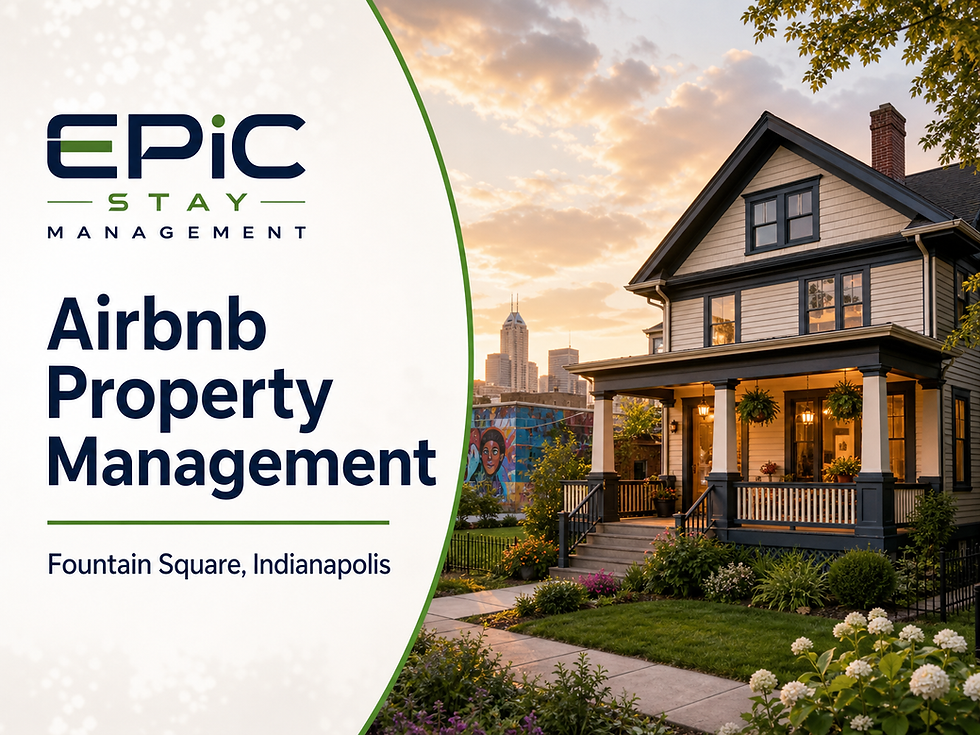
Owning a furnished rental in Fountain Square can be appealing for obvious reasons. The neighborhood sits close to downtown Indianapolis, has a strong identity, attracts visitors who care about dining, live music, art, local businesses, and walkable experiences, and offers a different stay than a conventional downtown hotel. A well-positioned home may appeal to weekend travelers, concert guests, couples, wedding parties, families visiting relatives, business travelers, relocating households, medical visitors, and guests who want access to the broader Indianapolis market without staying in the center of the convention district.
The location story is only the beginning. A property still needs accurate positioning, professional photos, disciplined pricing, reliable cleaning, fast guest communication, controlled access, parking instructions, noise standards, maintenance coverage, supply oversight, and a plan for nights when a guest, neighbor, cleaner, or vendor needs help. Fountain Square is an active urban neighborhood, not a self-operating amenity. The same energy that can make the area attractive also increases the importance of clear expectations and local response.
Epic Stay Management provides short-term and mid-term rental management across Indianapolis and Central Indiana. The objective is to build a dependable operating system around the property, protect the owner’s time, maintain guest-ready standards, and reduce the preventable mistakes that can damage reviews or create neighborhood friction.
This guide explains what Airbnb management in Fountain Square, Indianapolis should include, which guest segments may fit the neighborhood, how parking and noise can affect operations, what owners should verify before launching, how to compare self-management with professional management, and which questions to ask before signing an agreement.
Own or plan to operate a furnished rental near Fountain Square? Request a call with Epic Stay Management to discuss the property, operating goals, and management fit.
Quick Answer: What Does a Fountain Square Airbnb Property Manager Do?
A Fountain Square Airbnb property manager coordinates the daily and strategic work required to keep a short-term or mid-term rental competitive, guest-ready, and compatible with its neighborhood. The exact scope depends on the agreement, but full-service management can include listing creation, photography coordination, platform setup, rate adjustments, calendar management, guest communication, screening procedures, check-in support, cleaning scheduling, inspections, maintenance response, supply control, review management, owner reporting, and operating recommendations.
The strongest managers do more than answer messages and schedule cleaners. They create a system for the complete guest journey. That includes deciding which guests the property should attract, explaining parking and access accurately, setting realistic occupancy and quiet-hour rules, coordinating turnovers, documenting problems, controlling vendor access, and making sure the property is ready before every arrival.
Professional management cannot guarantee revenue, occupancy, reviews, or investment performance. Results depend on the property, location, condition, amenities, competition, pricing, demand, regulations, expenses, guest behavior, and owner decisions. Management is valuable when it improves execution, reduces preventable losses, creates accountability, and allows the owner to step back from daily operations.
Why Fountain Square Requires a Neighborhood-Specific Management Strategy
Fountain Square is part of Indianapolis, but it should not be managed exactly like Downtown Indianapolis, Broad Ripple, Carmel, Fishers, or Westfield. Guests choose the neighborhood for different reasons, and those reasons affect listing language, photography, amenities, pricing, minimum stays, parking guidance, and house rules.
Visit Indy’s Fountain Square neighborhood guide describes the Fountain-Fletcher area as roughly one mile southeast of downtown and highlights vintage shops, restaurants, working artists, live music, the Fountain Square Theatre Building, the Indianapolis Cultural Trail, and other neighborhood destinations. That creates a strong location story, but it does not mean every nearby property is equally walkable or equally suited to short-term rental use.
A home several blocks from Virginia Avenue may offer more space and easier parking than a compact unit near the commercial core. A condo may be convenient for two guests but difficult for a larger group. A single-family home may serve families well but require stricter exterior and noise controls. A design-focused property may compete on experience, while a practical furnished home may be better suited to relocation or thirty-day stays.
A neighborhood-specific strategy starts with one question: why would the most likely guest choose this property instead of a downtown hotel, another Fountain Square rental, or a home in a different Indianapolis neighborhood? The answer may involve walkability, private parking, bedrooms, a fenced yard, a dedicated workspace, pet-friendly features, a distinctive design, access to downtown, or a longer-stay setup. The listing and operations should support that answer.
Common Guest Segments for Fountain Square Furnished Rentals
Dining, Music, Arts, and Weekend Visitors
Fountain Square’s restaurants, performance spaces, shops, bars, galleries, duckpin bowling, and local character can attract couples, friends, and leisure travelers. Some guests want a neighborhood experience rather than a conventional downtown trip. They may plan to walk to dinner, attend a concert, explore local shops, use the Cultural Trail, or combine Fountain Square with other Indianapolis destinations.
These guests often care about accurate location information, simple self-check-in, strong Wi-Fi, comfortable beds, a clean bathroom, parking clarity, and recommendations that feel local rather than generic. The listing should explain what is realistically walkable, what requires a drive or rideshare, and whether late-night neighborhood activity may be noticeable from the property.
The manager should avoid promising that the home is “steps from everything” unless that statement is accurate. Guests notice when maps, travel times, and parking conditions do not match the listing. Clear expectations improve conversion with the right guests and reduce complaints from guests who wanted a different environment.
Concert, Festival, and Event Guests
Live music, neighborhood events, downtown conventions, sports, and regional entertainment can create booking opportunities. A Fountain Square property may appeal to guests attending an event nearby or to visitors who want neighborhood access while remaining close to downtown.
Event demand can be valuable, but it can also increase the risk of parties, unauthorized visitors, parking conflicts, and late checkouts. The operating plan should define occupancy, visitor rules, parking capacity, exterior monitoring within platform and legal limits, noise expectations, and escalation procedures. Pricing should respond to demand without assuming every event will fill every property.
A manager should evaluate booking pace, lead time, group size, guest history, message quality, and the relationship between the event and the property. A high rate is not useful if it attracts the wrong reservation or leaves the calendar empty. Event strategy should protect both revenue opportunity and neighborhood compatibility.
Couples and Small Groups
Studios, one-bedroom units, and smaller homes may be attractive to couples or two-to-four-person groups who value walkability and design. These guests may be less dependent on large kitchens or multiple bathrooms but more sensitive to noise, cleanliness, lighting, mattress quality, climate control, and accurate parking guidance.
Smaller properties need disciplined space planning. The number of dining seats, luggage storage, bathroom hooks, outlets, bedside lighting, and workspace surfaces can matter more than decorative extras. A compact unit that is easy to use may outperform a larger but confusing space.
Families and Multi-Generational Groups
Single-family homes and larger townhomes can attract families visiting relatives, attending weddings, celebrating milestones, relocating, or combining an Indianapolis trip with neighborhood activities. These guests may value bedrooms, laundry, a usable kitchen, multiple bathrooms, off-street parking, and predictable sleeping arrangements.
Family bookings require clear information about stairs, child-related hazards, outdoor areas, street traffic, neighborhood noise, occupancy, parking, and the exact number of real beds. A sofa should not be represented as a comfortable full-time bed unless it is designed and prepared for that purpose. The manager should also consider high chairs, portable cribs, gates, and other family amenities only when they can be maintained safely and consistently.
Wedding, Reunion, and Celebration Travel
Fountain Square and nearby downtown venues can attract guests attending weddings, reunions, dinners, and celebrations. A full home may give families or wedding-party members space to prepare, gather, and stay together.
The listing and house rules should distinguish between normal guest use and events. A reservation for eight overnight guests does not automatically authorize twenty visitors, vendors, decorations, commercial photography, or a party. The manager should address visitor counts, parking, quiet hours, exterior use, trash, and additional cleaning before the reservation is accepted.
Business, Medical, and Project-Based Travelers
Indianapolis business activity, hospitals, construction projects, training assignments, insurance displacement, and temporary work can create demand for furnished stays. Fountain Square’s access to downtown and major roads may make some properties useful for professionals who want more space than a hotel.
These guests usually expect reliable internet, workspace, laundry, a functional kitchen, easy receipts or documentation, clear parking, and prompt maintenance. They may also require longer stays, flexible extensions, and periodic cleaning. The manager should decide how utilities, supplies, inspections, mail, maintenance access, and occupancy rules change when a guest stays for several weeks.
Relocation and Thirty-Day-or-Longer Guests
Some properties may be stronger as mid-term rentals during part or all of the year. Relocating households, people waiting for home construction, insurance-displaced families, traveling professionals, and guests between homes may value a furnished property for thirty days or longer.
Mid-term stays can reduce turnover frequency, but they are not simply long Airbnb reservations. The operating plan should address guest qualification, deposits or damage procedures, periodic property access, mail, utility use, lawn and snow responsibility, cleaning, maintenance, and possible tenancy implications. Owners should obtain appropriate legal and tax guidance before changing stay length or contract structure.
Which Fountain Square Properties Are Better Suited to Short-Term or Mid-Term Rental?
Not every attractive home is a good furnished-rental candidate. A property can have strong design and still be a weak operational fit because of parking, neighbor sensitivity, access, association rules, maintenance, insurance, layout, or owner expectations.
Walkable Condos and Apartments
Units near Virginia Avenue, Shelby Street, Prospect Street, or the Cultural Trail may have a clear location story. They can appeal to guests who want restaurants, entertainment, and neighborhood activity nearby.
The same properties may have shared entrances, association restrictions, limited parking, stairs, elevators, hallway noise, trash procedures, package concerns, and guest-access rules. Owners should verify building documents, leasing restrictions, association rules, insurance, and access procedures before listing. A manager cannot override a building policy or compensate for an owner who has not confirmed permission.
Townhomes and Duplex Units
Townhomes and duplexes can provide more bedrooms and private entry while remaining close to neighborhood attractions. They can work well for families, couples traveling together, and business groups.
Shared walls increase the importance of noise control, floor protection, quiet hours, and occupancy limits. Parking may be split among units, and trash or outdoor spaces may be shared. The listing should clearly explain which areas belong to the guest and which are common.
Single-Family Homes
Single-family homes may attract families and groups because they offer space, kitchens, yards, private entrances, and off-street parking. They can also require more maintenance, lawn care, snow planning, exterior lighting, pest control, and neighborhood oversight.
A home on a quiet residential block should not be operated like an event venue. The manager should set expectations before booking and respond quickly to complaints. Outdoor areas, fire pits, decks, garages, and porches need specific rules and safety review.
Design-Focused and Experience Properties
Fountain Square’s arts and cultural identity can support distinctive properties. A home with thoughtful interiors, local art, strong photography, and a clear design concept may compete on experience rather than price alone.
Premium positioning raises the standard for cleaning, maintenance, replacement items, photography, and listing accuracy. Guests paying for a design experience notice damaged furniture, missing décor, poor lighting, and inconsistent supplies. The owner should budget for wear, replacement, and refreshes.
Practical Homes for Mid-Term Stays
A property does not need to be trendy to serve a strong guest need. Reliable internet, laundry, parking, storage, a usable desk, a functional kitchen, and comfortable furniture can make a home attractive to relocation and project-based guests.
A practical mid-term property may produce fewer turnovers and less weekend volatility, but it needs a different screening and maintenance plan. The manager should decide how the home will be inspected during long reservations and how extensions, utilities, mail, cleaning, and access are handled.
What Full-Service Airbnb Management Should Include
Listing Strategy and Positioning
The listing should explain who the property is for, why the location matters, and what the guest can expect. Strong listing work includes a clear title, accurate room descriptions, sleeping arrangements, amenity details, parking instructions, accessibility information, neighborhood context, professional photographs, and transparent rules.
Positioning is not generic marketing. A one-bedroom walkable unit should not be described like a large family home. A quiet residential house should not be sold as a party base. A mid-term property should not rely entirely on weekend-event language. The listing should match the property’s strongest use case.
The manager should periodically review photos, descriptions, amenity lists, and guest questions. Repeated questions often reveal that the listing is unclear. Repeated complaints may show that the property is being marketed to the wrong guest.
Dynamic Pricing and Calendar Management
Rates should respond to seasonality, day of week, event periods, lead time, length of stay, booking pace, competing supply, review history, property size, and local demand. Static pricing can leave high-demand dates underpriced and normal dates overpriced.
Pricing software can support decisions, but it does not replace judgment. A manager should review minimum stays, orphan nights, gaps, last-minute discounts, far-future pricing, owner blocks, extended-stay discounts, and event strategy. The owner should understand the pricing philosophy even if the exact daily process is delegated.
The goal is not maximum occupancy at any price. A heavily discounted calendar can create more turnovers, wear, and guest-service work while producing weak net income. Pricing should be reviewed together with cleaning, platform fees, utilities, maintenance, and owner expenses.
Guest Communication and Reservation Management
Guest communication begins before booking and continues after checkout. The manager needs a process for inquiries, screening, reservation questions, arrival instructions, parking, access, maintenance, neighborhood concerns, checkout, reviews, and lost items.
Fast responses help, but accuracy matters more than speed alone. A rushed answer that promises unavailable parking, early check-in, or a late checkout can create operational conflict. Messages should reflect the actual property rules and current schedule.
The manager should also define when a question can be handled with an automated message and when a person must intervene. Automation is useful for routine instructions. It is not sufficient when a guest is locked out, a neighbor reports excessive noise, a cleaner finds damage, or an HVAC system fails.
Guest Screening, Occupancy, and House Rules
Urban neighborhood rentals require thoughtful screening. The goal is not to discriminate or interrogate guests. The goal is to understand the reservation, confirm that the group fits the property, and communicate rules before acceptance.
The manager should review the guest’s stated purpose, group size, local status when relevant, booking history, communication quality, arrival plan, and any request that conflicts with the listing. Occupancy should match the home’s approved sleeping capacity, parking, septic or utility limitations if applicable, and local requirements.
House rules should address visitors, parties, smoking, pets, parking, exterior areas, quiet hours, trash, check-in, checkout, and damage reporting. Rules need consistent enforcement. A long list that is never enforced does not protect the property.
Cleaning and Turnover Coordination
Cleaning is one of the most important parts of short-term rental operations. A hospitality turnover is not the same as a basic residential cleaning. Beds, bathrooms, kitchens, floors, trash, towels, supplies, appliances, outdoor areas, and guest-ready details require a property-specific checklist.
A manager should schedule the cleaner from the live calendar, confirm completion, document problems, coordinate laundry, restock supplies, and maintain backup coverage. Same-day turns require especially clear timing because one delay can affect the next guest.
The cleaner should report maintenance, damage, missing items, stains, odors, pests, access problems, and excessive trash. Cleaning photos and checklists can improve accountability, but they should be reviewed rather than collected without action.
Owners can also review Why Indianapolis Airbnb Owners Burn Out to understand how turnover coordination contributes to owner workload.
Inspections and Quality Control
A clean property can still be operationally unready. A slow drain, loose chair, missing remote, low batteries, broken lamp, damaged blind, weak Wi-Fi, leaking toilet, or malfunctioning lock can affect the stay.
Regular inspections help identify problems before guests do. The frequency may depend on turnover volume, property age, season, and risk. The manager should distinguish between cleaner confirmation, turnover inspection, maintenance inspection, and periodic owner-level property review.
Documentation gives the owner visibility into condition and helps establish when damage occurred. It also supports better maintenance planning and replacement budgeting.
Maintenance and Emergency Response
Short-term rentals create time-sensitive maintenance. A homeowner may wait until Monday to address an issue. A guest checking in on Friday night may need an immediate solution.
The manager should have vendor contacts, escalation procedures, spending limits, owner-notification standards, and documentation. Common issues include access failures, HVAC problems, plumbing leaks, internet outages, electrical concerns, appliance failures, weather damage, and guest-caused damage.
The management agreement should explain what the manager can authorize without approval, how emergency spending is handled, whether vendors are marked up, and how invoices are shared. Owners should maintain a repair reserve so urgent problems do not force delays or poor decisions.
Supply and Inventory Oversight
Toilet paper, paper towels, soap, trash bags, coffee supplies, dish products, laundry products, batteries, light bulbs, linens, towels, and replacement items need reorder points and storage rules.
Without an inventory system, owners may pay rush-delivery costs or discover shortages after a guest arrives. The manager should distinguish between guest consumables, cleaning products, owner storage, and items that cleaners are expected to supply.
Linens deserve separate attention. The property needs enough complete sets to support turnover timing, stains, damage, and laundry delays. A manager should know the approved products and avoid mixing sizes or colors that make turnovers harder.
Review and Reputation Management
Reviews influence guest confidence, conversion, and pricing power. A manager should respond professionally, identify recurring complaints, and correct operational patterns. The goal is not to argue with guests or hide legitimate problems. The goal is to improve the property and communicate responsibly.
A single unusual complaint may not justify a major change. Repeated comments about parking, noise, cleanliness, beds, temperature, or check-in usually require action. The manager should separate guest preference from operational failure and document the response.
Owner Reporting and Strategic Communication
Owners need more than payout notifications. Useful reporting can include booking activity, revenue, occupancy context, average rate, length of stay, cancellations, discounts, refunds, cleaning costs, maintenance events, guest issues, upcoming risks, and recommendations.
The owner should understand how often reports are provided, which platform statements remain accessible, how expenses are approved, and how major decisions are communicated. A manager should explain both strong and weak periods rather than presenting only favorable numbers.
Parking, Access, Noise, and Neighbor Relations in Fountain Square
Parking Must Be Described Precisely
Parking can materially affect a Fountain Square guest experience. Some properties have garages or driveways. Others depend on street parking, shared lots, assigned spaces, or limited curb availability.
The listing should state the number, type, location, and restrictions of available spaces. It should explain oversized-vehicle limits, alley access, permit requirements if any, street-cleaning or construction concerns, and whether guests may need to park farther away during busy periods.
Managers should avoid vague phrases such as “plenty of parking” unless the property controls the spaces. A guest who arrives late with children, luggage, or multiple vehicles may judge the entire stay based on the accuracy of parking information.
Access Systems Need Backup Plans
Smart locks and self-check-in are useful, but they can fail because of batteries, internet problems, incorrect codes, guest error, or physical damage. The manager needs a backup-entry plan that does not compromise security.
Access instructions should include the correct door, parking-to-entry route, stairs, lighting, lock operation, and what to do if the code fails. Urban properties with rear or alley entrances need especially clear instructions.
Noise Expectations Should Match the Location
Some Fountain Square properties may experience traffic, music, pedestrians, nearby businesses, or weekend activity. The listing should not describe an active location as silent. Guests who require a quiet environment should be able to make an informed choice.
Inside the property, owners can improve comfort with quality windows, curtains, white-noise machines, bedroom placement, door seals, and clear quiet-hour rules. The manager should also control guest-created noise through screening, occupancy limits, exterior-use rules, and prompt response.
Neighbor Relationships Matter
A profitable reservation does not justify repeated neighborhood conflict. Parking, trash, smoking, outdoor activity, unauthorized visitors, and late-night noise can damage relationships and increase regulatory risk.
Owners should provide a reliable local contact, respond to concerns, and correct recurring problems. A manager should document complaints and determine whether the issue arose from a guest, property design, unclear instructions, or an operating failure.
Indianapolis Short-Term Rental Permits and Compliance
Indianapolis has established a short-term rental permit program in Chapter 852 of the Indianapolis-Marion County Code. The ordinance addresses permitted structures, parking and sign compliance, annual permits, application information, possible inspections, fees, and enforcement.
The current ordinance states that each short-term rental unit is to be permitted individually on an annual basis and that an initial permit fee is $150. Applications may require owner information, property-manager contact information when a manager is used, advertising and occupancy details, and the type of dwelling. The ordinance also allows inspections in connection with registration and provides for enforcement when owners do not comply.
Rules, forms, interpretations, and procedures can change. Owners should verify current requirements directly with Indianapolis Department of Business and Neighborhood Services and appropriate advisors before operating, purchasing, changing ownership, or changing a rental strategy.
A permit is not the only compliance question. Owners should also review:
Zoning and lawful dwelling status
Building, fire, and life-safety requirements
Parking and signage rules
State and local taxes
Insurance coverage and exclusions
Mortgage and lender restrictions
Association, condominium, lease, and deed restrictions
Platform rules and account ownership
Accessibility and fair-housing obligations where applicable
Stay-length and tenancy implications for longer reservations
A property manager may support documentation and operational compliance, but the owner remains responsible for obtaining legal, tax, insurance, and association advice. Hiring a manager does not cure an ineligible property or authorize activity prohibited by law or contract.
Self-Managing vs. Hiring a Fountain Square Airbnb Manager
Self-management can work for an owner who lives nearby, enjoys hospitality, responds quickly, understands pricing, has dependable cleaners and vendors, and is available during evenings, weekends, and holidays.
The owner may preserve more gross revenue by avoiding a management fee and may prefer direct control over pricing, guest selection, furnishings, and maintenance. Self-management can also be valuable for learning the property during the first months of operation.
The cost is more than hours. It includes interruptions, cleaner cancellations, rate decisions, guest screening, late-night access issues, supply trips, maintenance coordination, neighbor communication, review risk, and the mental load of monitoring every reservation.
Professional management may make sense when the owner lives out of town, has a demanding job, owns multiple rentals, is experiencing burnout, has inconsistent cleaners, misses messages, does not want to manage pricing, or needs a local team to protect guest experience and property condition.
For a broader comparison, review Self-Managing vs. Hiring a Professional Airbnb Property Manager and 10 Reasons to Hire a Professional Airbnb Property Manager in Indianapolis.
The decision should be based on expected net income, workload, risk, owner goals, and service scope—not on the assumption that self-management is free or that professional management always improves revenue.
How to Evaluate the Cost of Airbnb Management
Management fees should be compared with the services provided and the owner outcome. A low percentage can become expensive if it excludes important work or allows pricing errors, slow responses, poor cleaning, refunds, damage, or long vacancies.
Owners should ask whether the percentage is calculated on gross booking revenue, accommodation revenue, collected rent, or another amount. They should identify separate charges for onboarding, photography, listing setup, software, inspections, maintenance coordination, supplies, linens, credit-card processing, and extended-stay work.
The better comparison is expected net income and time commitment. Estimate booking revenue, then subtract platform fees, management fees, cleaning not paid by guests, maintenance, utilities, supplies, insurance, taxes, reserves, financing, and capital replacements.
Then consider the value of time recovered and risk reduced. An owner with a demanding career may reasonably value evenings and weekends differently from an owner who enjoys hosting. A manager should not promise that the fee will always pay for itself.
Common Mistakes Fountain Square Airbnb Owners Should Avoid
Assuming the Neighborhood Name Guarantees Demand
Fountain Square is recognizable, but the name does not make every property competitive. Guests compare price, photos, reviews, parking, amenities, bedrooms, condition, and convenience. The listing needs a specific reason to win the reservation.
Exaggerating Walkability
A property may be in or near Fountain Square without being an easy walk to every destination. Use accurate distances and travel descriptions. Consider weather, luggage, children, mobility, and late-night conditions.
Treating a Residential Home Like an Event Space
Large homes can attract groups, but occupancy does not authorize parties or events. Clearly separate overnight use from gatherings, visitors, commercial photography, and vendor activity.
Ignoring Parking and Vehicle Limits
A home that sleeps eight may not have space for four cars. Parking capacity should influence maximum occupancy and listing language. Guests should know the plan before arrival.
Buying Furnishings Before Defining the Guest
Furniture should support real use. Beds, dining seats, workspace, luggage storage, lighting, durability, and kitchen equipment should match the target guest and approved occupancy.
Treating Cleaning as a Commodity
The cheapest cleaning option can become expensive when missed details create refunds, emergency calls, or poor reviews. The cleaner needs hospitality experience, a property checklist, and accountability.
Relying Only on Automation
Automated messages, pricing software, and smart locks are useful. They do not replace judgment when a guest is confused, a cleaner finds damage, a neighbor complains, or a system fails.
Operating Without a Repair and Replacement Reserve
Locks, HVAC systems, plumbing, appliances, furniture, linens, cookware, and electronics wear out. Owners should maintain reserves for urgent repairs and planned replacements.
Ignoring Insurance, Association, and Lender Requirements
A city permit does not replace private-contract review. Owners should confirm insurance, mortgage, condominium, lease, deed, and association restrictions before operating.
A Practical 30-Day Onboarding Plan
Property review: Evaluate condition, safety, access, parking, sleeping capacity, furnishings, supplies, internet, appliances, outdoor areas, and maintenance risks.
Compliance review: Confirm current city, state, tax, insurance, lender, association, platform, and ownership requirements with appropriate agencies and professionals.
Guest-positioning review: Define the likely guest, stay length, strongest amenities, location story, and competitive set.
Photography and listing setup: Prepare the home, create accurate room descriptions, organize professional photographs, and document rules.
Pricing setup: Establish base rates, minimum stays, event strategy, discounts, gap-night rules, owner blocks, and extended-stay pricing.
Operations build: Create cleaning, inspection, supply, maintenance, access, emergency, neighbor-response, and guest-communication workflows.
Vendor readiness: Confirm primary and backup cleaners, maintenance contacts, lawn or snow responsibility, pest control, and specialty vendors.
Owner controls: Define approval limits, reporting, expense documentation, platform access, and communication expectations.
Launch review: Test locks, internet, appliances, instructions, maps, messages, parking, and the complete guest journey.
First-month optimization: Review search activity, inquiries, booking pace, guest questions, defects, rates, and operating costs, then adjust.
A controlled launch is usually better than rushing an unprepared property live. Early reviews can shape performance for months, and preventable failures are harder to correct after guests have documented them publicly.
Metrics Fountain Square Owners Should Review Every Month
A professional manager should help the owner understand more than gross revenue. A property can be busy and still produce weak net income if discounts, turnovers, refunds, utilities, supplies, and maintenance are not controlled.
Owners should review:
Gross booking revenue and owner payout
Occupancy, average daily rate, and average length of stay
Booking lead time and cancellation activity
Platform fees, discounts, refunds, and guest credits
Cleaning costs and unrecovered turnover expense
Maintenance and replacement spending
Utility, supply, lawn, snow, pest, and internet costs
Review score, recurring complaints, and response time
Operational problems that affected availability
Upcoming reservations, owner blocks, and event periods
Parking, noise, or neighbor incidents
Performance by guest segment and stay length
These metrics should be interpreted together. Lower occupancy can be acceptable when rates and expenses are strong. A full calendar can be weak if the property was discounted too heavily or required repeated concessions.
Three Common Fountain Square Owner Scenarios
Scenario 1: The New Investor Who Bought the Neighborhood Story
An owner purchases a renovated home and expects it to perform because Fountain Square is popular. The property has attractive finishes, but the owner has not defined a guest, confirmed parking, tested Wi-Fi, created rules, or arranged cleaner and maintenance backups.
A stronger approach is to build the operation before chasing occupancy. Confirm compliance, identify the likely guest, adjust sleeping capacity, create a complete photo set, test access, document the property, establish pricing rules, and prepare vendors. A controlled launch protects early reviews.
Scenario 2: The Burned-Out Local Self-Manager
A local owner has managed the home for a year and is tired of late-night messages, cleaner cancellations, supply runs, rate changes, and parking questions. Bookings continue, but the rental controls evenings and weekends.
Professional management may be valuable even if revenue does not change dramatically. The owner should compare the fee with time recovered, missed opportunities, guest-service risk, vendor coordination, and the ability to focus on work, family, or additional investments.
Scenario 3: The Property That Needs a Different Stay Strategy
A home performs well on certain weekends but struggles during normal weeks. The owner assumes the answer is always a lower nightly rate.
The property may need a different guest position or a hybrid calendar. The manager can evaluate whether to emphasize couples, family travel, business stays, relocation, pet-friendly features, workspaces, or thirty-day stays. The solution may involve photos, amenities, minimum stays, or channel mix rather than simple discounting.
Questions to Ask a Fountain Square Airbnb Property Manager
Which Indianapolis neighborhoods and property types do you actively manage?
Who answers guest messages during evenings, weekends, holidays, and emergencies?
How do you evaluate a property’s likely guest and stay strategy?
How are rates, minimum stays, discounts, and event periods reviewed?
Who coordinates cleaning, and how is quality verified?
What happens when the primary cleaner or maintenance vendor is unavailable?
How do you screen reservations and handle unauthorized parties or visitors?
How are parking, noise, trash, and neighbor complaints managed?
What spending can you authorize without owner approval?
Are there maintenance markups, software fees, inspection charges, or setup fees?
How are damages, refunds, chargebacks, and platform disputes documented?
Which booking platforms and software systems will be used?
Will the owner retain access to listings, calendars, statements, and performance data?
How often are reports and strategic recommendations provided?
How are stays longer than thirty days handled?
What permits, taxes, insurance, association rules, and legal requirements must the owner verify?
How can either party terminate the agreement, and what happens to future reservations?
What services are specifically excluded from the management fee?
Owners should compare written scope, local coverage, authority, backups, reporting, and contract terms—not simply the title “co-host” or “property manager.”
What the Management Agreement Should Explain
The management agreement should make the operating relationship clear before listings, calendars, or guest communications are transferred.
It should address:
Management fee calculation and payment timing
Onboarding, photography, setup, inspection, and software charges
Cleaning, laundry, linens, supplies, and restocking responsibility
Maintenance approval limits and emergency authority
Vendor markups, invoice access, and reimbursement
Guest refunds, damage claims, chargebacks, and disputes
Owner stays, blocked dates, and property access
Permit, tax, insurance, association, and legal responsibilities
Ownership and control of listings, photos, reviews, and data
Reporting frequency and owner communication
Term, renewal, termination, and future reservations
Services that are outside the fee
Owners should not rely on a sales conversation when the written agreement says something different. Resolve questions before the manager takes control of the calendar.
How Epic Stay Management Supports Fountain Square Owners
Epic Stay Management provides full-service oversight for short-term and mid-term rentals with an emphasis on pricing discipline, guest communication, cleaning coordination, maintenance oversight, property care, and hands-off ownership.
The management conversation begins with the property and owner goals. An owner may want to reduce workload, improve an underperforming listing, launch a new home, stabilize operations, or consider a mid-term strategy.
Epic Stay Management reviews property type, location, condition, amenities, listing history, operations, and likely guest use. Not every property is accepted, and professional management is not the right fit for every owner. The goal is to determine whether the home and management model fit together.
Owners can begin at EpicStayManagement.com or request a call. Share the property address, bedrooms, bathrooms, current listing, recent performance, known issues, parking, and management goals.
For a broader overview of local management, review Airbnb Property Management in Indianapolis and Airbnb Property Management in Downtown Indianapolis.
Central Indiana Markets Served
Epic Stay Management focuses on Indianapolis and Central Indiana. Management availability depends on the property, location, operating condition, service scope, and fit with company standards.
Relevant markets include:
Indianapolis
Fountain Square
Downtown Indianapolis
Broad Ripple
Carmel
Fishers
Noblesville
Westfield
Greenwood
Zionsville
Lawrence
Owners comparing nearby markets can review the live guides for Carmel, Fishers, Westfield, and Downtown Indianapolis.
Frequently Asked Questions
Is Fountain Square a good location for an Airbnb?
Fountain Square can support furnished-rental demand because of neighborhood dining, live music, arts, entertainment, access to downtown, and its local identity. A specific property still needs to be evaluated based on location, parking, rules, condition, amenities, competition, pricing, expenses, and operating fit.
What does full-service Airbnb management include?
Service scope varies, but it can include listing setup, pricing, calendar management, guest communication, cleaning coordination, inspections, maintenance response, supplies, reviews, reporting, and strategic planning.
Does Indianapolis require a short-term rental permit?
Indianapolis has an annual short-term rental permit program under Chapter 852 of the Indianapolis-Marion County Code. Owners should verify current forms, fees, inspection procedures, and property-specific requirements with the city before operating.
Can Epic Stay Management manage a property that is already listed?
A current listing can be reviewed for positioning, photos, pricing, reviews, operations, future reservations, account control, and transfer requirements. The next steps depend on the platform setup and existing agreements.
Can a Fountain Square Airbnb be managed as a mid-term rental?
Possibly. A property may be positioned for thirty-day-or-longer stays when the location, furnishings, amenities, pricing, compliance, insurance, and owner goals support that strategy.
Does professional management guarantee more revenue?
No. A manager cannot guarantee bookings, occupancy, reviews, nightly rates, or revenue. The value comes from professional execution, pricing discipline, guest service, local coordination, and reduced owner workload.
How much does Airbnb property management cost?
Fees vary by company, property, service level, and revenue definition. Owners should review the percentage, separate charges, owner-paid expenses, and expected net income.
Who pays for cleaning?
The arrangement depends on the listing and agreement. Cleaning may be charged to the guest, paid by the owner, or involve costs not fully recovered. Owners should understand how cleaner invoices and guest cleaning fees are handled.
Who handles maintenance emergencies?
A full-service manager should explain after-hours coverage, vendor response, spending limits, owner notification, and documentation. Some repairs may require owner approval or specialist vendors.
Can I block dates for personal use?
Usually, but owner stays affect availability, pricing, cleaning, and revenue. The agreement should explain how owner blocks are submitted and how much notice is required.
Will I keep access to my Airbnb account?
Account and listing access should be addressed before signing. Owners should understand who controls the listing, photos, reviews, calendar, payout information, and data if the agreement ends.
How quickly can management begin?
Timing depends on property readiness, contracts, platform access, photography, repairs, supplies, vendors, existing reservations, permits, and compliance review. A controlled launch is usually better than rushing an unprepared home live.
Related Resources
Airbnb Property Management in Indianapolis: What Owners Should Know Before Hiring a Local Manager
The Complete Beginner’s Guide to Starting an Airbnb in Indianapolis
Self-Managing vs. Hiring a Professional Airbnb Property Manager
10 Reasons to Hire a Professional Airbnb Property Manager in Indianapolis
Airbnb Property Management in Westfield, Indiana
Important Disclaimer
This article is general educational and marketing information. It is not legal, tax, accounting, investment, insurance, zoning, licensing, association, building-code, safety, or real estate brokerage advice. Short-term and mid-term rental requirements, taxes, platform rules, insurance coverage, neighborhood restrictions, and association policies can change and may vary by property. Owners should verify current requirements with the City of Indianapolis, Marion County, the State of Indiana, their association, insurer, attorney, tax professional, lender, and other appropriate advisors before operating or changing a rental strategy.
Revenue, occupancy, nightly rate, reviews, and investment performance are not guaranteed. Results depend on market demand, property condition, location, amenities, competition, pricing, operating quality, expenses, regulations, guest behavior, and owner decisions.


Comments