Why Indianapolis Airbnb Owners Burn Out: The Hidden Work Behind Self-Managing a Short-Term Rental

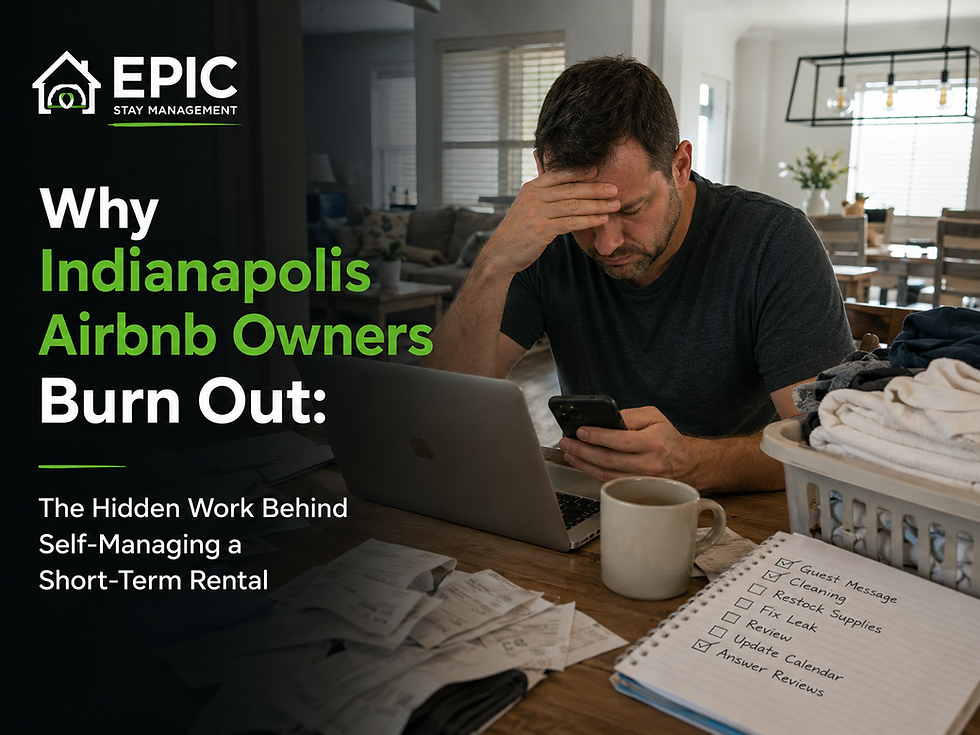
Self-managing an Airbnb can look simple from the outside. You list the property, accept reservations, schedule a cleaner, answer a few messages, and collect the payout. That is the version most owners imagine when they first turn a house, duplex, condo, or furnished rental into a short-term rental.
The reality is different. In Indianapolis, Airbnb owners are not just competing with other homes. They are competing with hotels, professional operators, polished listings, event-driven demand, guest expectations, cleaning standards, and review pressure. The work becomes constant. Messages come in during dinner. Cleaners need instructions between stays. Pricing needs to move with the calendar. Maintenance issues show up when a guest is already inside the property. One bad turnover can turn into one bad review, and one bad review can affect bookings for months.
At Epic Stay Management, we work with Indianapolis short-term rental and mid-term rental owners who want the income opportunity without turning the property into a second full-time job. This guide explains why Airbnb owner burnout happens, what hidden work most owners underestimate, and when professional Airbnb property management in Indianapolis starts to make sense.
Quick Answer: Why Do Airbnb Owners Burn Out?
Indianapolis Airbnb owners burn out because self-management is not one task. It is guest communication, pricing, cleaner coordination, maintenance, review protection, calendar management, supply tracking, emergency response, and constant decision-making. The work does not stay inside normal business hours. It follows the owner into nights, weekends, holidays, and workdays.
Burnout usually does not happen because the owner is bad at hosting. It happens because the owner is trying to operate a hospitality business without a team, without repeatable systems, and without enough time to manage every detail consistently.
The Hidden Work Starts Before the Guest Books
A lot of owners think the work begins after a reservation is made. In reality, the work begins before the guest ever clicks book. The listing has to earn trust. The photos have to be clear. The headline has to compete. The description has to answer questions. The amenities have to be accurate. The sleeping arrangements have to be easy to understand. The house rules have to be firm enough to protect the property but reasonable enough to avoid scaring away good guests.
Pricing also begins before the booking. Indianapolis demand can move around sporting events, conventions, concerts, family weekends, holidays, school calendars, work travel, and seasonal patterns. A static nightly rate may feel easier, but it can miss high-demand revenue and create slow calendar gaps. Owners who self-manage often start by pricing emotionally instead of operationally. They either underprice because they want bookings or overprice because they compare their property to the best-looking listing in the area.
That creates the first layer of stress. The owner checks the app constantly. Why is the weekend not booked? Should the rate change? Should the minimum stay change? Should discounts be added? Should the title be rewritten? Is the listing buried? That constant uncertainty is a major part of owner burnout.
Guest Messaging Becomes a 24/7 Job
Guest communication is one of the most underestimated parts of Airbnb management. It is easy to say, 'I will just answer messages myself.' It is harder to do that when the messages arrive while the owner is at work, asleep, at dinner, driving, traveling, or trying to enjoy a weekend.
Guests ask about check-in, parking, Wi-Fi, early arrival, late checkout, thermostat settings, TV instructions, appliance use, pet rules, extra guests, nearby restaurants, missing items, lock issues, noise concerns, and whether they can bend the house rules. Some questions are simple. Some are urgent. Some are repetitive. Some are frustrating. All of them affect the guest experience.
A slow response can cost a booking before the guest arrives. A slow response during a stay can turn a small issue into a negative review. This is where owners begin to feel trapped by the property. Even when nothing is wrong, they have to stay alert because something could become wrong at any moment.
Cleaner Coordination Is Where Many Owners Lose Control
Cleaning is not just cleaning. In a short-term rental business, the cleaner is part of the guest experience, the quality-control process, the inventory system, and the maintenance alert system. The property has to be reset correctly every time.
A turnover may need beds made, towels replaced, bathrooms cleaned, kitchen checked, trash removed, dishes inspected, floors cleaned, surfaces wiped, supplies restocked, odors handled, damage noticed, linens washed, and photos or notes sent back to the owner. If the cleaner misses something, the guest usually blames the host. If the guest checks in early and the property is not ready, the host has a problem. If the prior guest leaves late, the cleaner has less time. If the cleaner cancels, the owner may have to scramble.
This is one of the biggest burnout points for Indianapolis Airbnb owners. The property may be profitable on paper, but every turnover creates anxiety. Owners begin checking their phones constantly on checkout days. Did the guest leave? Did the cleaner arrive? Is the next guest coming early? Are the towels done? Is anything broken? That stress adds up. Airbnb property manager Indianapolis
Maintenance Does Not Wait for a Convenient Time
Short-term rentals get used differently than long-term rentals. Guests may not know the property. They use appliances, locks, furniture, showers, HVAC systems, TVs, Wi-Fi, kitchen items, and plumbing in ways that create wear. Small problems can become urgent because a guest is already paying for the stay.
A loose door handle, slow drain, clogged toilet, broken remote, dead battery, tripped breaker, noisy HVAC system, leaking sink, or bad Wi-Fi connection might be minor in a personal home. In an Airbnb, it can become a same-day guest issue. The owner may be trying to manage contractors, cleaners, guests, and platform messages at the same time.
Maintenance stress is not only about the repair itself. It is about timing, access, communication, documentation, cost control, and guest recovery. Owners who self-manage often feel like they are always reacting. They are not just managing a rental. They are managing interruptions.
Reviews Create Constant Pressure. Airbnb property manager Indianapolis
Airbnb reviews matter because they influence trust, conversion, and future booking momentum. That creates pressure for owners. Every guest interaction feels like it could affect the next month of revenue. Owners may over-accommodate guests because they fear a bad review. They may approve late checkouts, extra requests, refunds, or exceptions just to avoid conflict.
The problem is that review pressure can wear an owner down. The owner is not only trying to provide a great stay. They are trying to prevent public criticism. That is emotionally different from a traditional rental. A long-term tenant may complain privately. A short-term guest can leave a review that future guests will see.
Professional management helps by making the experience more consistent. The goal is to reduce preventable review problems through clear expectations, cleaner oversight, fast communication, and proactive maintenance. Strong reviews usually come from repeatable systems, not luck.
Pricing Stress Can Become an Owner Obsession
Owners often underestimate how much mental energy pricing takes. The calendar becomes a daily scoreboard. If the property is not booked, the owner wonders whether the price is too high. If it books too quickly, the owner wonders whether the price was too low. If a major Indianapolis event passes without a premium booking, the owner feels like revenue was lost.
The hard part is that pricing is never finished. A rate that made sense last month may not make sense this week. A weekend that looked slow may pick up. A weekday gap may need a different approach. Longer-stay discounts may help in one season and hurt in another. Minimum stays can protect the calendar or block demand, depending on timing.
This is why revenue optimization is a management function, not a one-time setup. When owners try to handle pricing manually without a system, they often become emotionally attached to every open night. That is exhausting.
Owner Burnout Often Shows Up Slowly
Most Airbnb owners do not wake up one day and suddenly feel burned out. It builds slowly. First, the owner checks messages more often. Then they start thinking about turnovers during work. Then they start resenting guest questions. Then they feel anxious before every check-in. Then they stop improving the listing because they are tired. Eventually the property feels less like an investment and more like a demanding job.
Common signs of Airbnb owner burnout include delayed guest responses, inconsistent pricing updates, rushed cleanings, frustration with normal guest questions, missed maintenance items, declining review quality, calendar gaps, supply shortages, late-night stress, and the feeling that the property is always on the owner's mind.
Burnout also affects decision-making. Tired owners may accept poor bookings, ignore listing improvements, avoid maintenance, delay cleaner feedback, or stop tracking performance. The property can still generate income, but it may not be operating at its potential.
Self-Management Can Work, But Only With Systems
Self-management is not automatically a mistake. Some owners do it well, especially if they have time, hospitality experience, reliable cleaners, vendor relationships, strong documentation, and only one property. The problem is that many owners build the property first and build the systems later. By the time they realize the operation needs structure, they are already overwhelmed.
A self-managed Airbnb needs a documented turnover process, guest messaging templates, maintenance response plan, pricing review rhythm, supply checklist, cleaner quality standard, owner reporting process, and clear rules for exceptions. Without those systems, every stay becomes a custom project.
This is where professional management starts to separate itself. A manager is not valuable only because they answer messages. A manager is valuable because they bring structure to the entire operating model.
Why Local Indianapolis Management Matters
Airbnb is digital, but the property is physical. That matters. A local Indianapolis management approach can help with cleaner coordination, vendor access, property checks, restocking, guest issues, and market-specific judgment. Owners who live outside the area or have limited time often struggle because every physical issue requires someone local to act.
Indianapolis also has different guest patterns across neighborhoods and property types. A larger family home, a downtown-friendly unit, a suburban short-term rental, a property near hospitals, or a mid-term rental may need different positioning. A local manager can help shape the strategy around the property instead of forcing every home into the same playbook.
Local support is especially important when something goes wrong. A guest locked out at night, a cleaner no-show, a maintenance issue, or a same-day turnover problem needs practical action, not just good intentions.
How Epic Stay Management Helps Owners Step Out of the Daily Weeds
Epic Stay Management is built for Indianapolis property owners who want the benefits of short-term or mid-term rental ownership without carrying every operational detail themselves. The goal is to help owners protect the property, support guest experience, improve operating consistency, and create a more hands-off ownership experience.
That can include guest communication, pricing support, listing optimization, cleaning coordination, turnover oversight, maintenance coordination, owner updates, and strategic guidance for short-term and mid-term rental performance. The exact management plan should match the property, owner goals, guest demand, and level of involvement the owner wants.
The value is not only time savings. It is reducing avoidable mistakes. Missed messages, bad cleanings, weak pricing, preventable maintenance problems, and poor guest communication can all cost money. Professional management is about building a stronger operating system around the asset.
When It Is Time to Hire an Airbnb Property Manager
Hiring a manager starts to make sense when the property is taking more time than expected, when guest messages interrupt your day, when turnovers create stress, when cleaners need constant oversight, when pricing feels confusing, when reviews are slipping, or when you want to grow without adding more chaos.
It also makes sense when the owner values their time. A property can be profitable and still not be worth the constant interruption. The right question is not only, 'Can I manage this myself?' The better question is, 'Is self-management the best use of my time and energy?'
For many owners, the answer changes as the property becomes busier, as their life changes, or as they add more rentals. Professional management gives the owner a path to stay invested without staying trapped in the daily work.
Final Thoughts
Indianapolis Airbnb owner burnout is real because short-term rental management is real hospitality work. The property needs pricing discipline, guest communication, cleaning coordination, maintenance oversight, review protection, and local operating support. When one person tries to carry all of that alone, the investment can start to feel like a burden.
The good news is that burnout is not the only option. With the right management structure, an Airbnb or mid-term rental can become a more organized, more supported, and more hands-off asset. Owners do not have to choose between doing everything themselves and giving up on the opportunity.
If you own an Airbnb, vacation rental, short-term rental, or mid-term rental in Indianapolis and want a better way to operate it, Request a Call with Epic Stay Management to review whether professional management is the right fit.
Frequently Asked Questions
Why do Airbnb owners get burned out?
Airbnb owners get burned out because the work is constant. Guest messaging, cleaner coordination, pricing, maintenance, supplies, reviews, and check-in issues can happen during nights, weekends, holidays, and workdays. Without systems or support, the property can feel like a second job.
Is self-managing an Airbnb worth it?
Self-managing can be worth it for owners who have time, strong systems, reliable cleaners, and the ability to respond quickly. It becomes harder when the owner is busy, the property has frequent turnovers, or the operation starts affecting work, family time, and stress levels.
What does an Airbnb property manager do?
An Airbnb property manager helps operate the rental on behalf of the owner. This can include guest communication, cleaning coordination, turnover oversight, pricing support, listing optimization, maintenance coordination, owner updates, and guest experience management.
When should I hire an Airbnb property manager in Indianapolis?
You should consider hiring a manager when the property is taking too much time, guest messages are interrupting your life, turnovers are stressful, pricing feels difficult, reviews are at risk, or you want a more hands-off way to own the rental.
Can Epic Stay Management help with mid-term rentals too?
Yes. Epic Stay Management can help owners think through short-term rental and mid-term rental strategies depending on the property, location, owner goals, and guest demand. Some Indianapolis properties may benefit from a flexible approach instead of relying only on weekend short-term stays.
Related Resources
Important Disclaimer
This article is for general informational purposes only and is not legal, tax, insurance, financial, investment, regulatory, or property-management advice. Short-term rental rules, platform policies, city requirements, HOA restrictions, insurance requirements, tax obligations, and property performance can vary by property, neighborhood, market, and owner situation. Property owners should consult the appropriate professionals before making decisions about buying, operating, listing, or hiring management for a short-term rental or mid-term rental.


Comments